
Juna's Jar

Unfortunately, sometimes goodbyes don’t happen.
Our children get to school and find that their friend is no longer there. There was no goodbye. No see you later. It can feel like they just disappeared. And suddenly, the ground can start to feel a little shaky underneath us. We begin wondering if—or when—it will be our friend’s turn to leave.
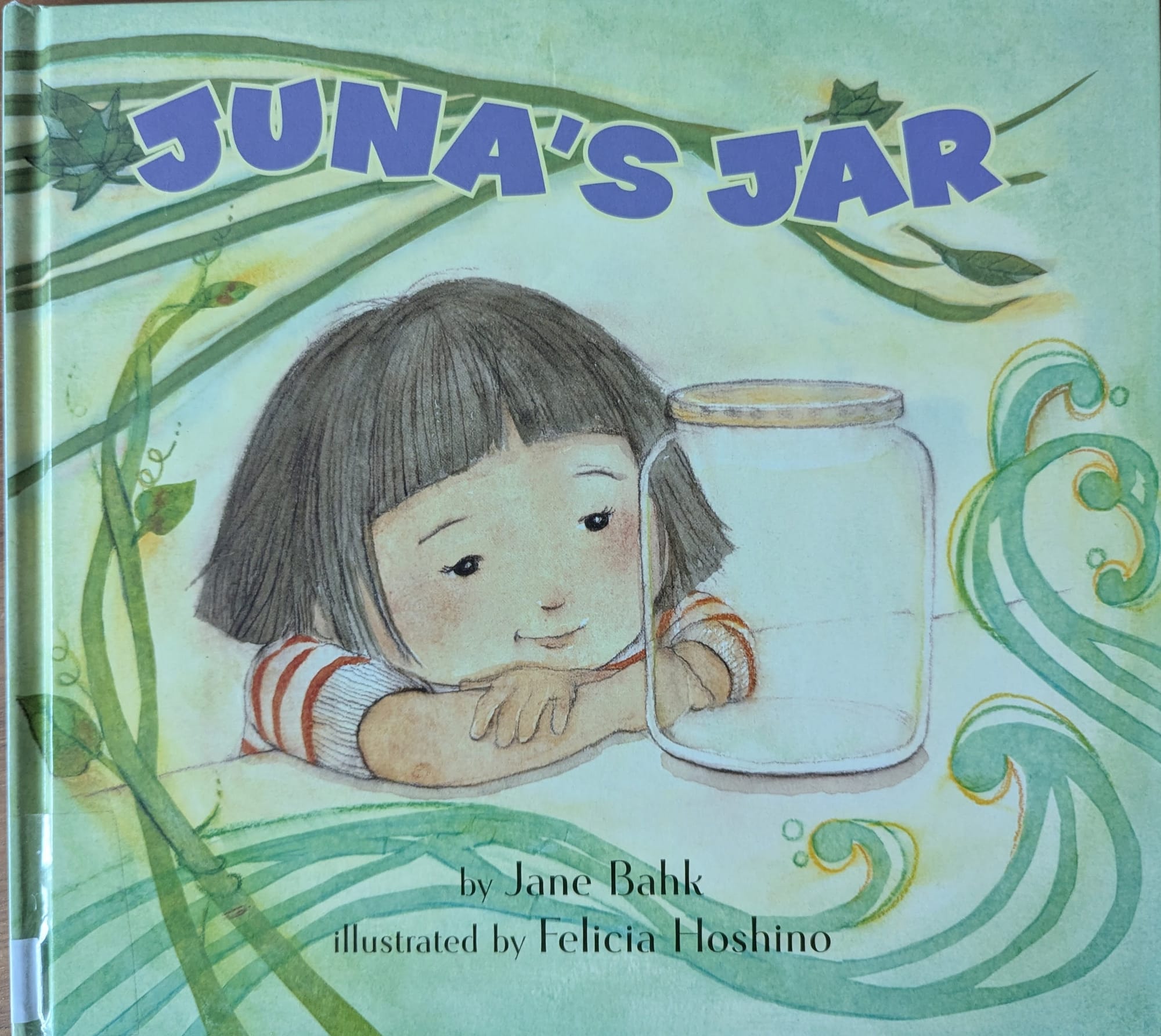
Juna’s Jar, written by Jane Bahk and illustrations by Felicia Hoshino, tells the story of Juna and her best friend Hector, who love to go on adventures together and play outside in the park. They use Juna’s kimchi jar to collect colorful rocks and small bugs. One day, Juna goes to Hector’s abuelita’s apartment and discovers that Hector has moved far away with his parents. Hector had wanted to say goodbye, but when he went to find Juna, she wasn’t home.
And so Juna is left without a goodbye.
When friends disappear like this, actually saying goodbye the next time can start to feel even bigger and scarier. We know how much it hurts to lose someone, and avoiding the goodbye can sometimes feel easier.
But what does that teach our children about friendship?
Does it begin to feel like there is always a clock on a friendship, counting down until someone disappears?
Healthy attachments are what we need in our communities. So what happens to those attachments when our friends just disappear? What do we learn about human relationships when we can’t trust that we will have the chance to say goodbye? We want to be able to make sense of our stories. But when an important piece of our lives is suddenly gone, making meaning from what happened becomes much harder.
Even as I sit here writing this, I can feel the headache coming on from trying to hold back tears. How many people have disappeared from my own life? How many goodbyes have I avoided because I was afraid of how much they would hurt?
And I find myself wondering what I can learn from Juna, this little girl who didn’t get the goodbye she needed.
Juna is living an experience many of us—and many of our children—have had. But she finds a way to work through it.
She uses her imagination.
After Hector leaves, Juna’s empty kimchi jar is filled with a gift from her brother: a small fish. That night, Juna dreams of searching for Hector. When she wakes up, the fish is suddenly too big for the jar.
This part reminds me of Clifford the Big Red Dog. It is Emily Elizabeth’s love for Clifford that makes him grow so big.
And I wonder if something similar is happening for Juna.
Maybe it is Juna’s love for Hector—and the adventures she takes in her dreams—that helps her begin to process the loss of her friend. Each time Juna wakes up and discovers that the gift in her jar has become too big, the jar becomes empty again. And each night, her imagination takes her somewhere new.
Eventually, in her dreams, Juna finds Hector and says goodbye. And what is sitting on the bedside table next to Hector as he sleeps? The kimchi jar Juna gave him, filled with the things they had collected together.
The jar is still there. Their friendship mattered. Their adventures happened. Hector didn’t simply disappear and take all of those memories with him.
Only after Juna has had that moment is she able to begin moving forward and open herself up to new friends and new adventures.
Juna has an incredible superpower: her imagination.
And it helps her create the goodbye she didn’t get to have.
My own children have experienced losses like this. In the moments when I haven’t been able to reach the parents of a friend who has left, I have asked them one simple question:
What would you want to say to your friend if you could say goodbye?
Getting specific can help them think about what they might want to say:
What would you thank them for?
What favorite memories would you want to share?
What would you tell them you hope or wish for them?
Sometimes we may not be able to change the fact that the goodbye didn’t happen. But perhaps we can still help our children find a way to say what they needed to say.
And there is another side of this story that I keep thinking about.
Hector wanted to say goodbye to Juna.
He tried.
But he couldn’t find her.
It makes me wonder what might have been different if the adults around Hector had helped him think through the people he wanted to say goodbye to before he moved.
When our families are preparing for a transition, there are so many practical things demanding our attention. Packing. Paperwork. Travel. Housing. School.
But perhaps one of the most important things we can help our children do is pause and ask:
Who do you need to say goodbye to?
Discussion Questions
Have you ever had a friend leave and you didn’t get to say goodbye? Tell me about that.
- How did you feel?
- What do you wish you could have done or said?
- If you could talk to that friend now, what would you want them to know?
- Is there something we could do now to help you remember them or express what you wish you could have said?
Juna’s kimchi jar is not only something that helps her through her loss. It is also a symbol of her connection with Hector and the adventures they shared together.
- Do you have an object that reminds you of a friend?
- What memories does it hold for you?
Activity: Create a Memory Jar or Box
Create a memory jar or box for the people you have said goodbye to—or the people you wish you had been able to say goodbye to.
You might add:
- notes about favorite memories
- drawings or photos
- small objects that remind you of that person
- something you wish you could have said
- something you hope for them
And perhaps, like Juna, our children can discover that even when they didn’t get the goodbye they wanted, there are still ways to remember, to make meaning from what happened, and eventually to make room for new adventures.